How doth the little crocodile
How doth the little crocodile is a parodic poem that Alice attempts to recite in Chapter II of Alice's Adventures in Wonderland, only to find that the words have been altered in her memory. The poem replaces the industrious bee of Isaac Watts's original didactic verse with a crocodile that improves its shining tail and welcomes little fishes in with gently smiling jaws. This transformation from a moral lesson about hard work into a celebration of predatory patience signals the first major rupture in Alice's sense of self, as she realizes that the knowledge she once possessed has become unreliable. The poem thus functions as both a literary parody and a psychological turning point, marking the moment when Alice begins to doubt whether she is still the same person she was that morning.
Origin and Parodic Structure
The poem is a direct parody of Isaac Watts's "Against Idleness and Mischief" (1715), a staple of Victorian moral education that begins "How doth the little busy bee / Improve each shining hour." Alice's version retains the meter and rhyme scheme of the original but substitutes the crocodile for the bee, transforming the moral exemplar into a predator. Where Watts's bee "gathers honey all the day / From every opening flower," Carroll's crocodile "improves his shining tail" and "pours the waters of the Nile / On every golden scale." The second stanza completes the inversion: the bee's cheerful industry becomes the crocodile's cheerful grin, and the bee's harmless gathering becomes the crocodile's welcoming of "little fishes in / With gently smiling jaws." The parody thus replaces productive labor with predatory cunning, and moral improvement with physical adornment, subverting the very purpose of the original poem.
Context of Recitation
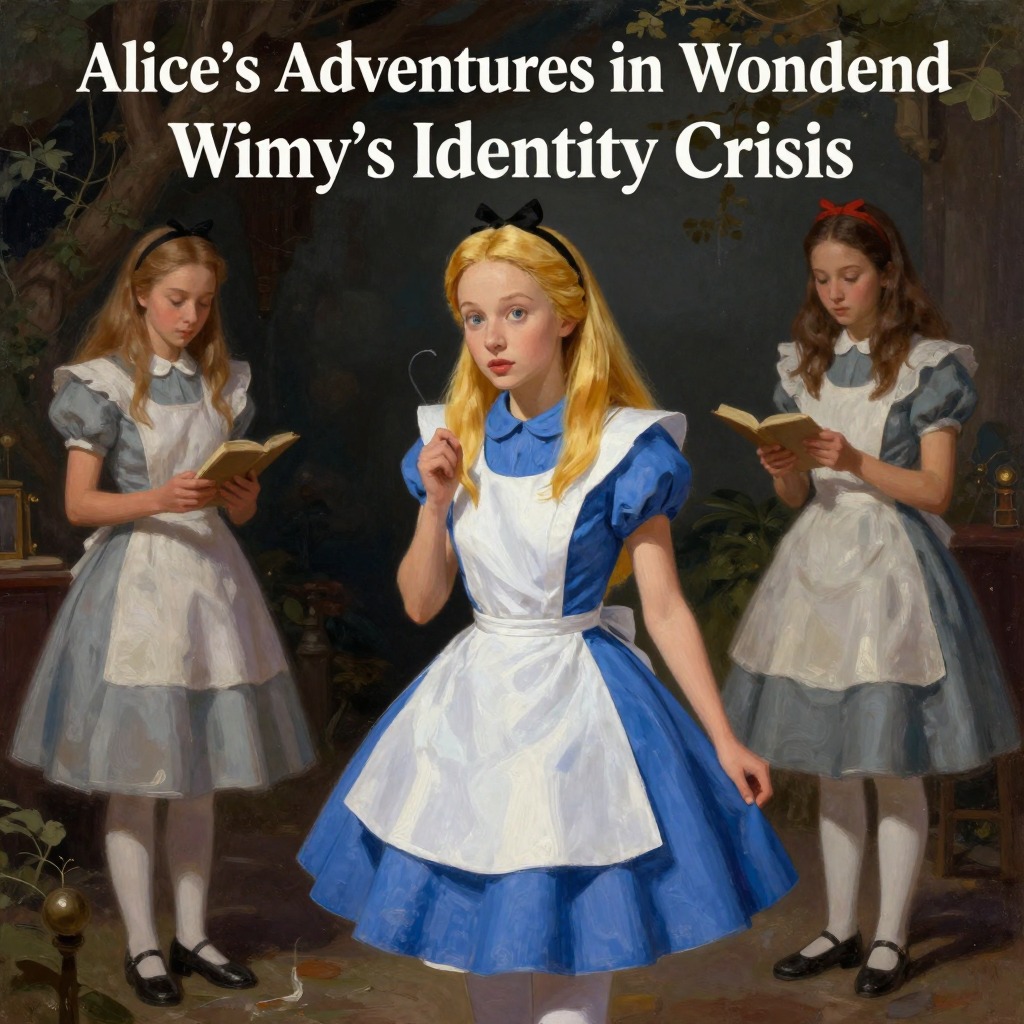
Alice recites the poem in Chapter II, "The Pool of Tears," immediately after she has grown to more than nine feet tall and wept a pool of tears that fills the hall. She is in the midst of a profound identity crisis, having just asked herself "Who in the world am I?" and tried to determine whether she has been changed into another child, such as Ada or Mabel. To test whether she still knows the things she used to know, she attempts to recite the multiplication table—which comes out wrong—and then tries geography, producing "London is the capital of Paris, and Paris is the capital of Rome." Finally, she crosses her hands on her lap as if she were saying lessons and begins to repeat "How doth the little—" but her voice sounds hoarse and strange, and the words do not come the same as they used to do. The poem that emerges is the crocodile version, and Alice immediately recognizes it as wrong: "I'm sure those are not the right words," she says, and her eyes fill with tears again.
Thematic Significance: Identity and the Failure of Knowledge
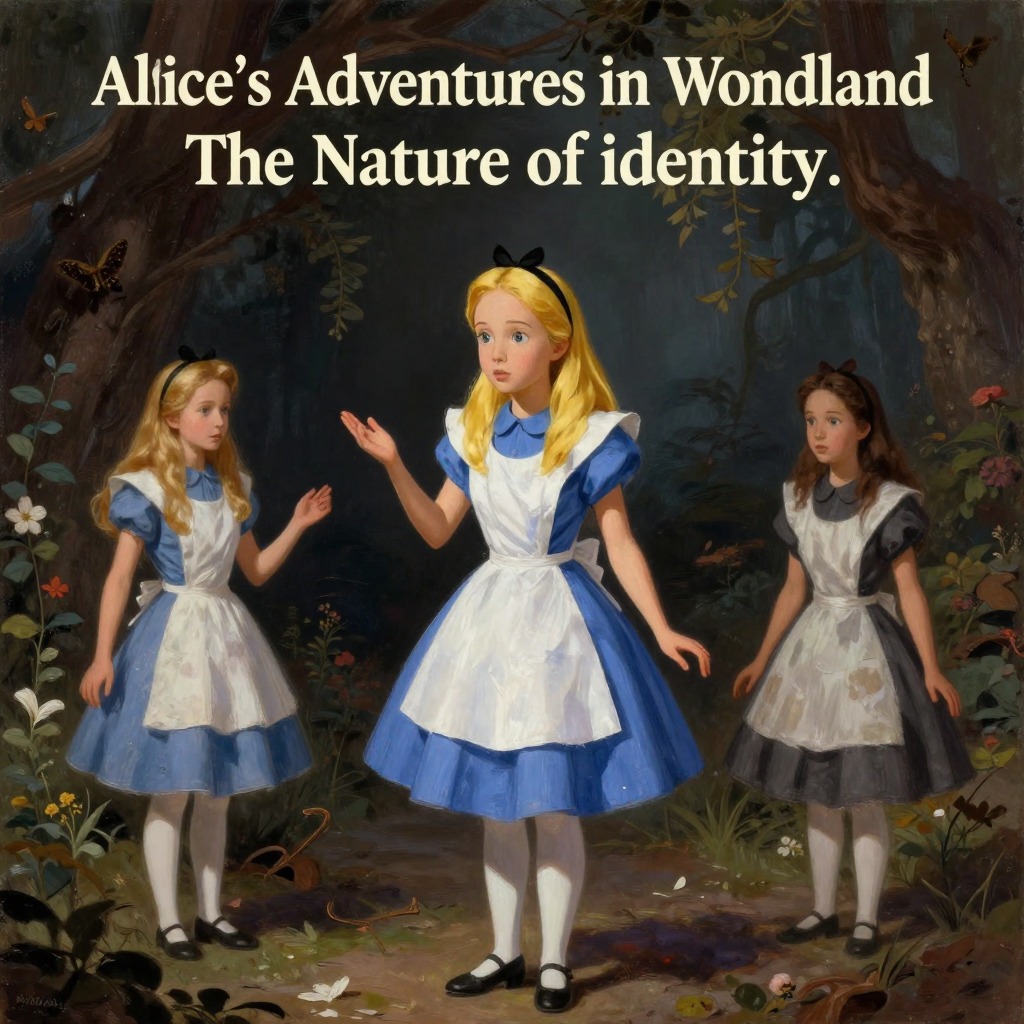
The poem's alteration is not merely a comic device but a central mechanism in Alice's crisis of identity. Throughout the chapter, she has been trying to anchor her sense of self in the knowledge she acquired in the schoolroom—the multiplication table, geography, and moral poetry—but each of these pillars fails her. The crocodile poem represents the final collapse of that framework: even the moral verses that were meant to shape her character have become unreliable. Alice concludes that she must have been changed for Mabel, a girl who "knows such a very little," and she declares that if she is Mabel she will stay down in Wonderland rather than return to a life of endless lessons. The poem thus becomes the evidence that convinces her she is no longer the person she was, and it drives her to the desperate wish that her family would put their heads down the rabbit-hole and tell her who she is.
Narrative Role and Recurrence
The crocodile poem is the first of several parodic recitations that Alice attempts throughout her adventures, each of which comes out wrong. Later, she recites "You are old, Father William" for the Caterpillar, and the Caterpillar pronounces it "wrong from beginning to end." Still later, she recites "'Tis the voice of the Lobster" for the Gryphon and the Mock Turtle, producing a version that the Gryphon says is "different from what I used to say when I was a child." The crocodile poem establishes the pattern: Alice's learned texts have been corrupted by her immersion in Wonderland, and each failed recitation deepens her sense of dislocation. The poem also echoes the book's opening, where Alice complains that her sister's book has "no pictures or conversations in it," and her own thoughts turn to Dinah the cat and whether cats eat bats. The crocodile poem, with its gentle, smiling predator, is a dark mirror of that earlier feline curiosity—a world where the eater and the eaten are bound together in a cheerful, amoral dance.
The Dream Frame and Final Significance
The entire adventure is revealed to be a dream when Alice wakes on the bank with her head in her sister's lap. Her sister, left alone, dreams of little Alice and the strange creatures of Wonderland, and she imagines that in after-time Alice will be a grown woman who keeps the simple and loving heart of her childhood. The crocodile poem, within this frame, becomes part of the dream's logic—a distortion of waking knowledge that is both frightening and liberating. It is the moment when Alice's education fails her, but it is also the moment when she begins to think for herself, questioning the rules and verses she has been taught. The poem thus stands at the intersection of Victorian moral instruction and Carroll's playful subversion of it, marking the point where Alice's journey into Wonderland becomes a journey into the instability of her own mind.